“Women in agriculture need to move from participation to ownership”
Dr. Mankodi Moitse, CEO Kagiso Trust (South Africa)
For the upcoming Women’s Month (October), Dr. Mankodi Moitse, CEO of South African development agency Kagiso Trust, challenges women to be more ambitious and go for ownership, leadership roles and economic independence. The column, written by Maphuti Mongatane from the South African magazine African Farming, details why women could and should push for equal opportunities in agriculture.
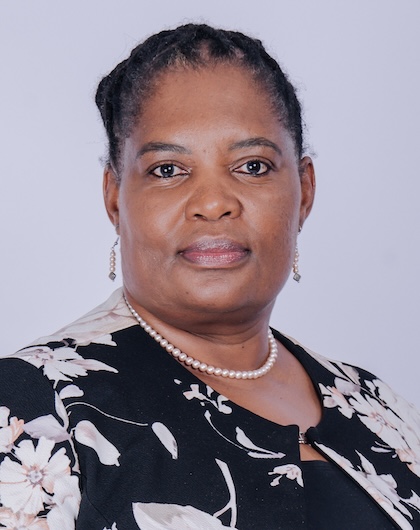
Dr Mankodi Moitse’s message is rooted in a belief that sustainable change does not begin by telling people what they lack, but by recognising the capabilities they already possess and creating the conditions for those capabilities to flourish. As CEO of Kagiso Trust, Dr Moitse has spent years working at the intersection of development, communities and partnerships. One of the greatest lessons her leadership journey has taught her is that lasting change cannot simply be imposed on people.
“People are not waiting to be saved”, she says. “They have knowledge, aspirations, and the desire to create better opportunities for themselves and future generations. What they often need is access to skills, resources, information, technology, networks and meaningful partnerships that can help turn potential into sustainable opportunities.”
For Dr Moitse, this is at the heart of the Kagiso Trust’s purpose. The organisation, founded in 1985, was established with a mission to alleviate poverty and enhance development in South Africa. They do this by working with communities. “When communities are involved in identifying their challenges, designing solutions and taking ownership of the outcomes, transformation becomes meaningful and sustainable”, the article states.
This philosophy also extends to agriculture, where Dr. Moitse sees enormous potential for women and young people. And here is where Dr. Moitse believes there is work to be done: instead of counting the women who simply participate in agriculture, she wants to know how much responsibility, ownership and economic independence these women really have. The important questions, in her opinion, are not “how many women are working in agriculture” – we know there are many of them – but rather:
What happens after participation?
Are they building businesses?
Do they own productive assets?
Are they making decisions?
Can their enterprises access markets?
Can those businesses grow and create employment?
The ultimate goal, to her, must be to move women from participation to ownership and economic agency.
Women should not only be in the room – they should help shape it
This is particularly important in agriculture, where women have historically played significant roles but have not always enjoyed equal access to land, finance, technology, markets, productive assets or commercial decision-making. Dr. Moitse believes this must change.
“Women should be enabled to become farmers, entrepreneurs, processors, innovators, executives, employers and owners throughout the agricultural value chain.” Ownership, the column states, does not necessarily mean owning a farm. Agriculture is a much bigger economy than primary production. There are opportunities in agro-processing, logistics, storage, animal health, mechanisation, financial services, technology, data, renewable energy, marketing and distribution.
For young women, Dr. Moitse sees enormous possibilities where agriculture, technology and climate resilience intersect. The question, she suggests, is not simply, “How do I become a farmer?” but rather, “Where can my skills create value in agriculture?”
From small enterprise to sustainable business
Opportunity alone is not enough, however. Dr. Moitse stresses that sustainable livelihoods require an ecosystem around the entrepreneur.
A farmer may have finance but no market, technical skills but no working capital, or a good product but no networks to help the business grow. This is why she places particular emphasis on market access and enterprise readiness.
A reliable market gives an entrepreneur the ability to plan and creates confidence for potential financiers. But that market must be supported by the ability to deliver consistently and competitively. This requires skills, business management, infrastructure, working capital, technical knowledge and strong relationships across the value chain.
It is also why partnerships matter so much. Government, business, financial institutions, development organisations and commodity bodies all hold different pieces of the solution. When they work together around the entrepreneur, rather than leaving individuals to navigate a fragmented system alone, the potential for sustainable growth becomes much stronger.
There is no shortcut to building something that lasts
For young women entering the agricultural sector and entrepreneurship, Dr. Moitse has another important message: “Be patient”. She also warns for comparing yourself to the good news show that is social media.
“In a world where social media can make success appear instant, it is easy to compare your beginning with someone else’s highlight reel. The new machinery, the successful harvest, the growing business and the awards are visible. The years of learning, mistakes, uncertainty and hard work are not.”
Dr. Moitse believes we need to become better at modelling the journey behind success. Her advice is to keep learning, seek mentors, ask questions, build relationships and develop the skills needed to run a sustainable enterprise.
The objective should not simply be to look successful, but to build something that can survive and grow. That includes being authentic about the journey rather than selling people unrealistic dreams.
Women know more than they give themselves credit for
Perhaps one of her most encouraging messages is that women should not underestimate the knowledge they already possess.
“Experience is knowledge. Solving problems is knowledge. Building relationships is knowledge. Managing difficult circumstances is knowledge.”
Women particularly often fail to recognise the value of what they have learnt along the way, as they are groomed by society to be “humble”. Dr. Moitse believes that this lived experience, when combined with new skills, mentorship and access to opportunities, can become a powerful foundation for entrepreneurship and leadership.
She also sees value in bringing generations of women together. Older women carry experience and institutional knowledge, and younger women bring new ideas, greater familiarity with the latest technologies and fresh perspectives. Rather than seeing these as competing strengths, Dr. Moitse believes they should be connected.
The woman at the table should bring another woman
As a leader who has spent years working across communities and institutions, Dr. Moitse understands that no one builds lasting success alone. Meaningful partnerships require trust, humility, accountability and a shared commitment to outcomes. The same principle applies to women supporting one another.
Her message to a young woman who wants to build something of her own is to believe that her ambition is valid and that she belongs in every room where decisions about the future are being made.
There will be setbacks. There will be moments of doubt. There will be doors that do not open. But resilience, she believes, is often what separates those who stop from those who continue.
And when that young woman eventually gets to the table, Dr. Moitse’s hope is that she will not simply take her seat – she will also make space for someone else.